


Global citizenship as a strategic advantage in careers, business, and international development
- Oct 28, 2024
- 4 min read
Updated: Jun 13
Zahra Henry, ZLH Careers
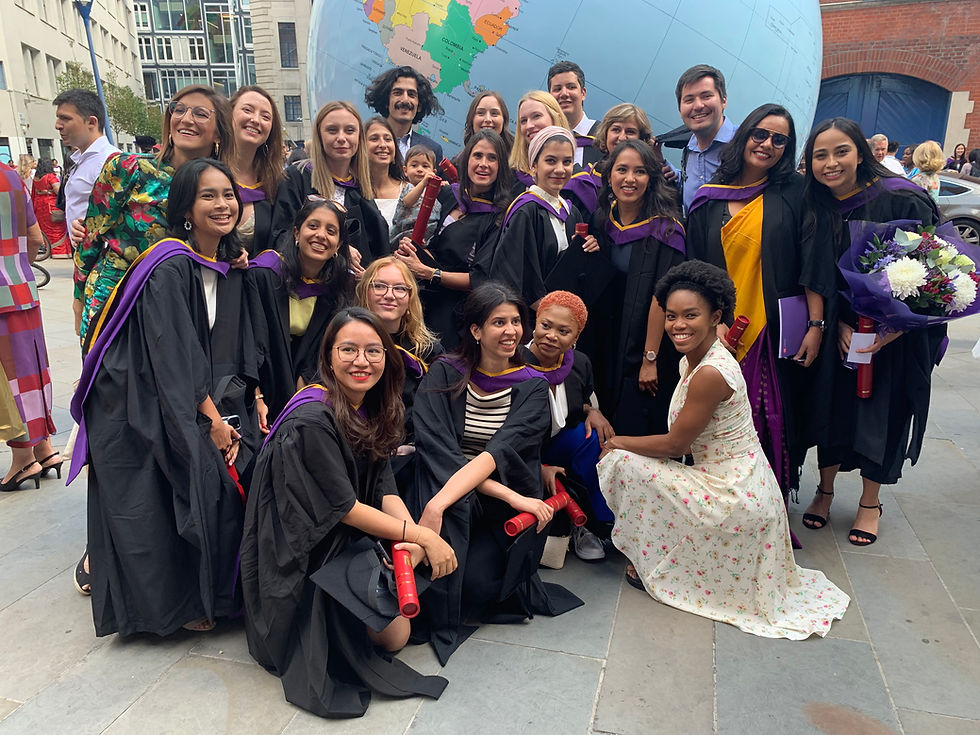
International exposure is often reduced to travel. In an era where movement is increasingly visible and aspirational, that is understandable, but incomplete. Global citizenship is not about how many countries you have visited or whether you feel culturally curious. It is about the practical ability to navigate people, systems, opportunities, and complexity across borders. That matters for professionals building international careers, entrepreneurs exploring new markets, businesses pursuing partnerships, and institutions operating in increasingly interconnected ecosystems.
At ZLH, this perspective has been shaped through lived work across different regions, sectors, and languages, from Caribbean regional institutions and cultural ecosystems to international entrepreneurship, development, and trade environments. One lesson has remained consistent: global exposure is only as valuable as what it helps you understand, build, or do differently.
Global citizenship matters for careers, businesses, and institutions
Global citizenship is often framed as a personal value. In practice, its implications are much wider.
Professionals increasingly work across borders, whether through international career moves, remote roles, consulting opportunities, entrepreneurship, or collaborative work that involves multiple countries and stakeholders. Businesses are exploring export markets, regional growth, strategic partnerships, and new commercial opportunities beyond their immediate geography. Institutions, meanwhile, operate in funding, policy, development, and partnership environments that are rarely confined to a single place.
In that context, global citizenship becomes less about abstract ideals and more about capability. It is the ability to communicate across cultures, adapt to unfamiliar systems, interpret context well, and recognise opportunity where others may only see difference.
Intercultural fluency makes for different strategic decisions
International experience does not automatically make someone better at their work. But meaningful exposure often changes how people think.
Studying and working across Montreal, London, Barcelona, and the Caribbean exposed me early to very different institutional cultures, communication styles, and expectations. Later, multilingual work across Caribbean creative economy ecosystems, including through UNESCO’s Transcultura programme with teams based in Havana, reinforced how often language, culture, institutional context, and history quietly shape whether collaboration succeeds. Some of that cross-sector and international work is reflected in ZLH’s portfolio.
That kind of experience sharpens judgement. Professionals with meaningful international fluency often ask different questions. They tend to interpret partnerships more carefully, communicate with greater awareness, and recognise that assumptions which make sense in one environment may fail completely in another.
This applies whether someone is navigating a global career, building a business, designing a programme, or leading institutional partnerships. I saw the same pattern again in Hyderabad, India, where curated engagements with the city’s startup infrastructure, women’s business support systems, creative economy, and public-private collaboration offered useful comparative lessons for Caribbean MSME growth.As explored in our article on India’s startup ecosystem and what it means for Caribbean MSME growth, international experience becomes much more useful when it informs practical decision-making.
Leaders’ worldview shapes business and institutional strategy
Businesses and institutions reflect the people who lead them.
A founder’s assumptions influence how a business approaches growth, partnerships, hiring, risk, or expansion. Institutional leaders shape how organisations think about collaboration, innovation, international engagement, and opportunity.
This is true at every scale. A leader with little international experience may approach partnerships cautiously or narrowly. Another with broader cross-border experience may recognise routes to collaboration, market access, or programme design that would otherwise be missed.
The same principle applies well beyond business. Universities, NGOs, development organisations, public agencies, and even governments are shaped in part by the worldview of those making decisions. Global citizenship matters not simply because it broadens individuals, but because the perspective of an organisation’s leaders drives its decisionmaking.
Cross-border collaboration requires more than introductions
Cross-border collaboration is often spoken about optimistically. In reality, introductions are only the beginning. Meaningful collaboration requires understanding how systems work, where decisions sit, what incentives shape participation, how institutions relate to one another, where funding flows, and how culture influences communication and trust.
That is where ecosystem awareness becomes critical. This became particularly clear through trade and investment engagement spanning Africa and the Caribbean, where conversations increasingly extend beyond diplomatic goodwill into practical questions about competitiveness, trade, market access, and commercial opportunity. We explored some of those shifts in our article on Caribbean trade and investment forums and what they reveal about competitiveness and growth.
The principle is broader than trade. Whether you are building partnerships, seeking international development collaboration, exploring market expansion, or designing cross-border programmes, relationships alone are rarely enough. Understanding the environment around the relationship matters just as much.
International experience becomes valuable when it translates into action
International exposure is not inherently useful. Its value often becomes clear later, when perspective, language, networks, or contextual understanding suddenly become relevant in a completely different setting.
I felt that quite strongly in 2025 while engaging with European consultants through the Caribbean Export EU-LAC accelerator ecosystem. On the surface, it was a straightforward professional interaction. But it was also a quiet full-circle moment, linking my earlier years spent studying and working in Spain with later Caribbean-facing international work.
That is often how cross-border capability develops. It does not always create immediate returns. Sometimes it accumulates gradually, then becomes unexpectedly useful when navigating a partnership, shaping a programme, entering a new market, or identifying an opportunity others might overlook. This is true for individual professionals, entrepreneurs, and institutions alike.
Opportunity is increasingly shaped across borders
Borders still exist, but opportunity increasingly moves across them.
Careers are less geographically fixed than they once were, with professionals more frequently navigating international roles, remote work, cross-border consulting, and global career transitions. Businesses are increasingly thinking about regional growth, export markets, strategic partnerships, and expansion beyond familiar territory. Development work, by its nature, often involves collaboration across institutions, funders, governments, and communities operating in different jurisdictions.
As these worlds become more interconnected, careers, business, and development no longer operate in neat silos. International opportunity is becoming both more practical and more competitive, which places greater value on preparedness, adaptability, and the ability to navigate complexity across different environments.
At its most useful, global citizenship is not abstract idealism or a lifestyle identity. It is a practical advantage rooted in awareness, cultural intelligence, communication, and the confidence to operate beyond familiar borders.
That perspective shapes how we think at ZLH about careers, business growth, partnerships, ecosystem design, and international opportunity. If you are exploring international career opportunities, market expansion, cross-border partnerships, or institution-building across regions, and would value a thoughtful conversation, you are welcome to book a conversation here.


Comments